
Beyond the Deck
#19: What Effective Leaders Never Do: 5 Communication Fails
At any given moment, millions of meetings are taking place.

At any given moment, millions of meetings are taking place. Yet, the data reveal a sobering reality: participants find only 50% of them engaging.
Simply put: Words spoken and slides shown do not equal a message received. Your team often walks away absorbing only half the story.
This gap is caused by “broadcast bias”—the human tendency to treat conversation as a platform for expression (output) rather than a tool for discovery (input). The paradox is sharp: while we instinctively prefer to talk, we find conversations most valuable when we are the ones being listened to.
A subpar leader focuses solely on giving instructions. An effective leader goes further. They go beyond sharing; they extract insights and ask questions to foster greater understanding. Furthermore, they know to avoid the following five major communication pitfalls:
1. The Confrontation
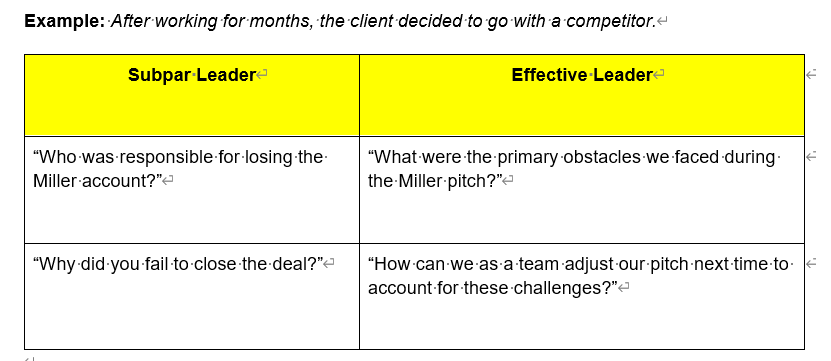
In the pursuit of efficiency, many leaders go for the jugular and try to assign accountability immediately. While this may appear to be a request for data, former lead FBI hostage negotiator Chris Voss notes that a confrontational approach often triggers an immediate defensive response. Instead of being curious about the explanation, you are demanding a confession.
When the human brain is triggered by a perceived indictment, logic evaporates, and the person is forced into fight-or-flight mode. Sophisticated communicators pivot to “what” and “how” questions to maintain tactical empathy.
2. The Spotlight Hijack (The “Boomerang”)
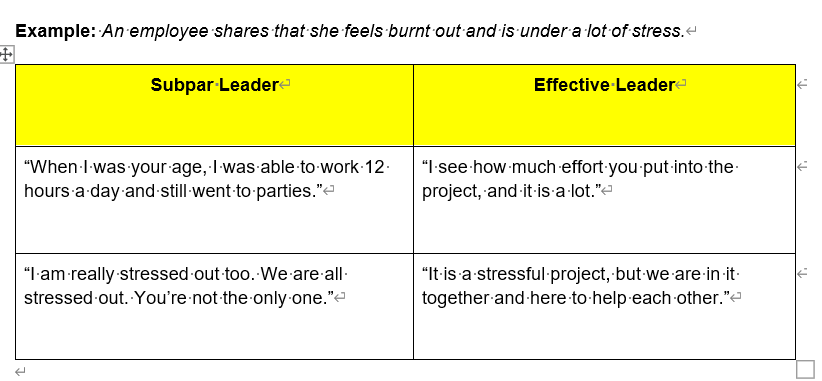
Organizational trust is often eroded by a habit trial attorney Jefferson Fisher describes as “conversational narcissism”—or the “Boomerang.” This occurs when a team member shares a challenge, and the leader immediately pivots to their own past experiences.
While this usually appears to be an act of empathy, it effectively robs the spotlight. It signals that the leader has little interest in the speaker’s situation because they are too busy being the hero of the story. A standard leader jumps at the chance to relate by recounting their own hero’s journey; an effective leader relates by validating the other person’s reality.
3. The Lack of Follow-up Questions
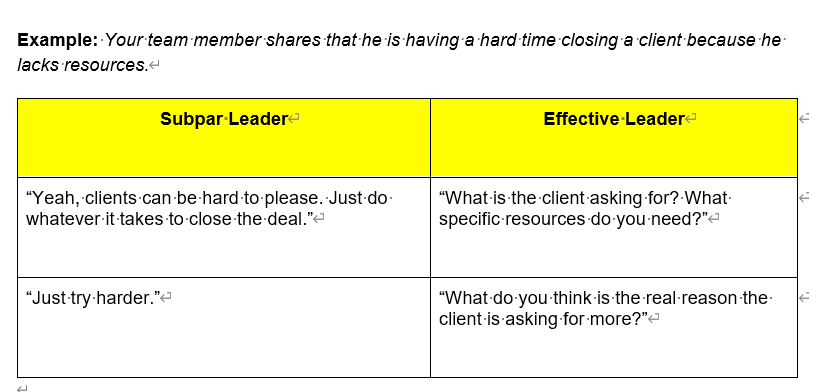
The most significant drain on meeting quality is the “Question Void.” Research by Alison Wood Brooks at Harvard Business School highlights that “follow-up questions”—those building specifically on the previous response—are the single greatest predictor of trust and perceived competence.
According to Brooks, asking follow-up questions shows that you’re listening to what the person has already said. “You’re probing for more information, which shows that you listened, you care, and you want to know more, which is like the whole embodiment of empathy and perspective taking,” she added.
A single question is often viewed as a perfunctory checklist item. A follow-up, however, is a strategic investment. It signals that the leader is actively processing the nuance of the response rather than simply waiting for their turn to speak.
4. Unmatched Feedback
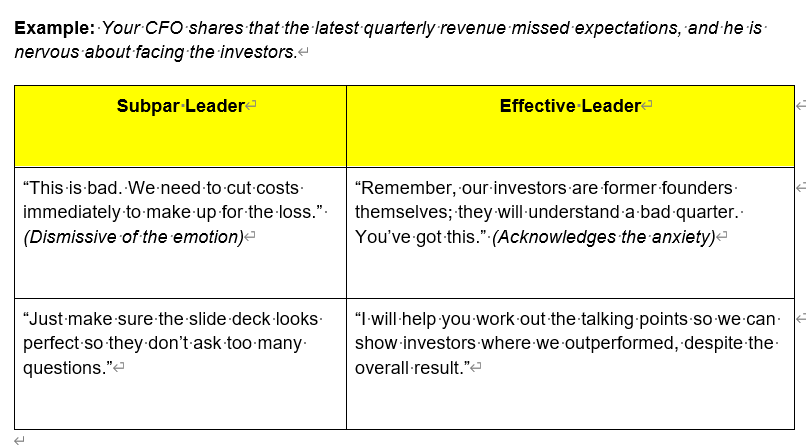
Effective communicators understand that conversation is not just a transaction of words and ideas; it is a structure of loyalty built on kindness and respect. When an employee comes to you with news—good or bad—failing to give “matching” appropriate feedback can chip away at trust.
“Unmatched” feedback signals a lack of empathy and awareness. However, when a speaker feels seen and acknowledged, they are significantly more self-motivated to dig deeper and exert the effort required to attain desired results.
5. The Presence Arbitrage
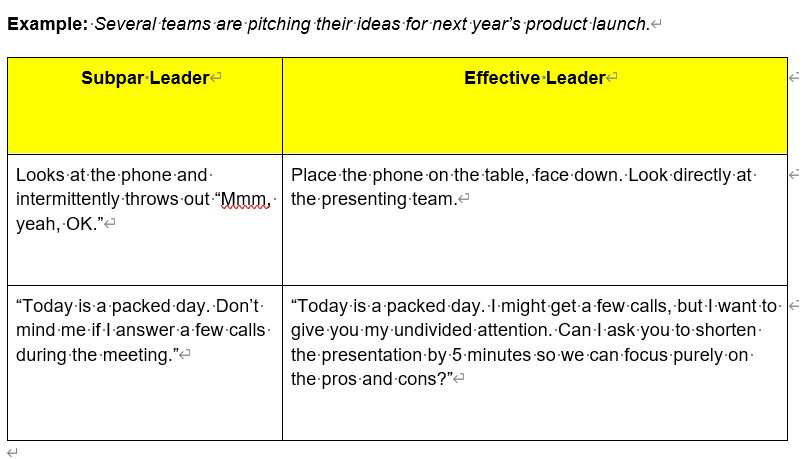
The “Inauthentic Facade”—the act of appearing to listen while mentally doing something else—is an expensive habit in the modern workplace. In an age of multiple information channels and endless distractions, offering undivided presence is a rare trait that elevates you as a leader.
Authenticity is difficult to fake and easy to detect. The “trust tax” incurred by a distracted leader slows down every subsequent interaction because the team begins to filter what they share, assuming the leader isn’t truly listening.
The Bottom Line
Ultimately, leadership communication is not a competitive sport where points are scored for the best rebuttal; it is a game of catch. The primary responsibility of the executive is to ensure the ball is never dropped.
As an audit of your own leadership style, consider a simple challenge: in your meetings this upcoming week, commit to asking three follow-up questions before stating a single opinion. By resisting the urge to boomerang the topic back to your own experiences, you stop being the most interesting person in the room and start being the most interested. The result isn’t just better talk—it’s better performance.
About the author: Jenny is the co-founder and head creator of Day 2 Coaching.
← Back to all posts