
Beyond the Deck
#13: Is Your Team Going to CES 2026?
If you wait behind your booth for people to approach you, you are depending on chance — and chance is not a strategy.
At this January’s Consumer Electronics Show (CES) in Las Vegas, the Taiwanese startup pavilion was a sight to see. Booth after booth showcased inventive products and services, eye-catching industrial designs, practical solutions to real problems, and founders who had spent years refining their technology. The delegation of Taiwanese founders truly represented the best of Taiwan’s problem-solving DNA.

At the pavilion, quite a few founders and their team members eagerly engaged visitors who approached the booth. They answered questions, scanned badges, and passed out brochures.
However, I also observed that unless visitors came to the booth and initiated the conversation, many founders did little more than offer an introductory “hello” and a courteous “thank you” as visitors moved on. Instead of sparking a thoughtful dialogue, the exchange did little to benefit either the team or the visitor.

While You Wait, Others Initiate
In juxtaposition, just a few aisles away, a group of startups from a European country was experiencing a steady stream of engagement. Their technology was not inherently more groundbreaking. Their booth was not larger. What they did differently was simple: a team member was out in the aisles initiating conversations, drawing attendees in, and guiding them back to the booth.
Once visitors arrived, the team delivered pithy but informative one-liners, asked intentional questions, and learned more about potential clients. Some even invited visitors to various after-parties to deepen the conversation.
In other words, these European founders weren’t waiting for visibility — they were creating it.
This contrast highlights an important truth: Taiwan’s delegation already shows up strong at CES. What they need now is the next level of communication strategy — one that helps them attract not just attention, but the right attention from potential investors, strategic partners, enterprise clients, and global talent.
Here are four tips to help you make your CES presence more impactful:
1. Develop a Crisp, Repeatable Narrative
At CES, you are competing for time. Even a few seconds can make a drastic difference. There is no need to give a long explanation of what you do when much of it should already be visible from your booth setup.
Prepare a catchy, repeatable 30-second one-liner. The goal is simple: when visitors return to their team, they can repeat your pitch accurately and confidently. Your narrative should travel — even when you’re not in the room.
2. Use Relatable Metaphors
Don’t assume all CES visitors understand — or even care about — the problem you’re solving. The fastest way to hook someone is to compare your product to something familiar.
For example, if you created an AI agent that manages workflow, compare it to a head chef in a five-star kitchen — issuing instructions, coordinating sous chefs, and ensuring flawless execution so the restaurant owner can focus on creating an exceptional dining experience.
A strong metaphor turns complexity into clarity.
3. Before You Share, Ask Questions
One of the most effective ways to begin a conversation at CES is with a targeted question:
“What is it about [the problem you’re solving] that interests you?”
For instance, if your product is a headphone that drowns out noise, ask:
“Why is quietness important to you?”
Their response tells you exactly what angle to emphasize. If noise affects their concentration, lead with your data on improved focus. If they travel frequently, highlight comfort and fatigue reduction.
When you ask the right question, you instantly know what to share — and what not to.
4. Don’t Wait at Your Booth — Practice Active Engagement Everywhere
One of Taiwan’s greatest strengths is humility. Founders tend not to oversell, and they often let their products speak for themselves. But at CES, humility paired with passivity becomes a disadvantage. If you wait behind your booth for people to approach you, you are depending on chance — and chance is not a strategy.
The difference between a forgettable CES experience and a breakthrough one often comes down to this:
Passive founders wait.
Active founders initiate.
Active engagement means learning how to strike up a conversation anywhere you go — not just when someone walks up to your display.
Start with Micro Exchanges
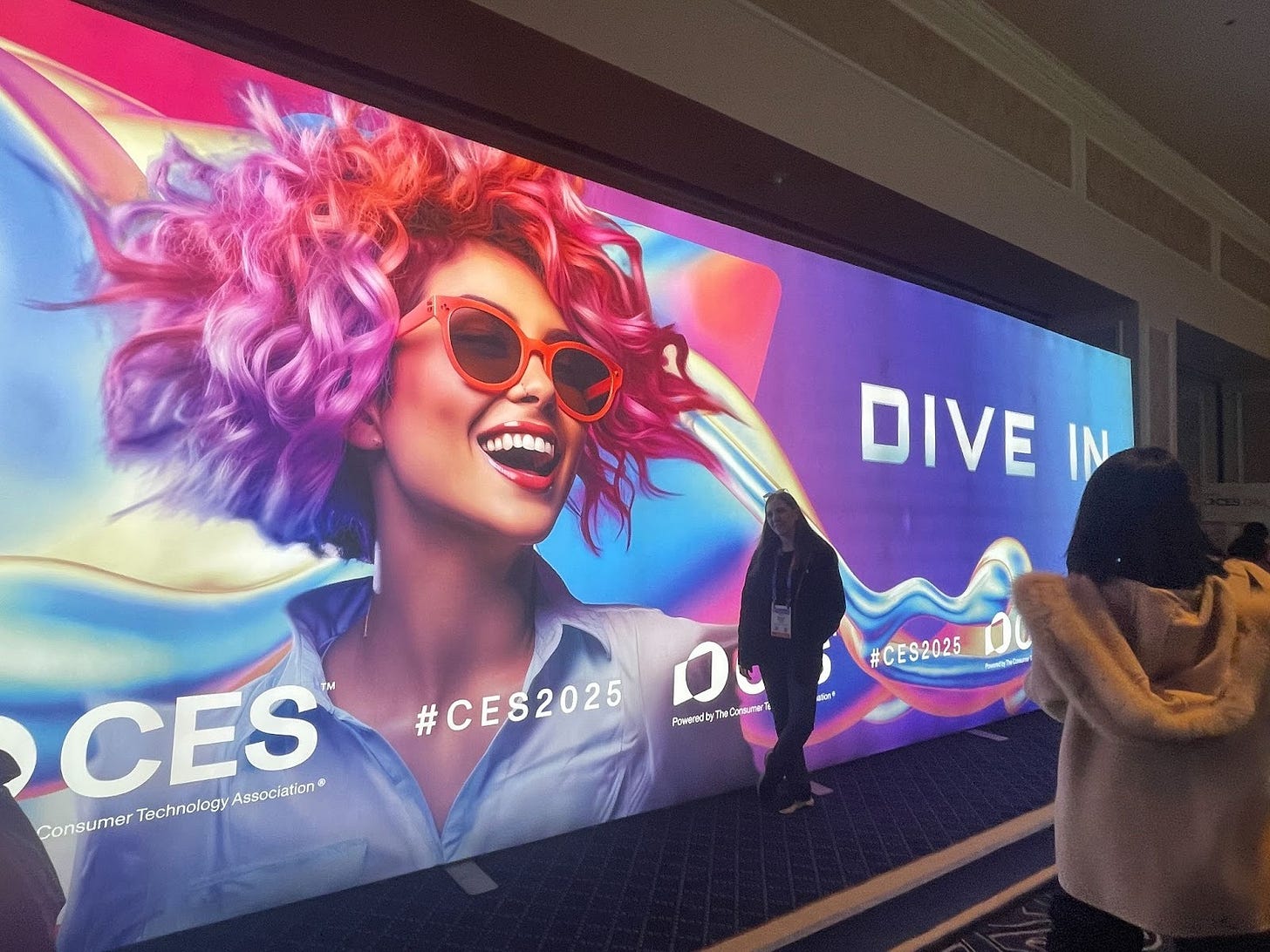
Everything is easier said than done. The sweet reward never comes unless you try and push your boundaries repeatedly. For someone who is an introvert, start slow by giving yourself a simple challenge: start three to five random conversations every day.
They don’t need to be long or complex. They just need to begin.
Talk to the person waiting in line for pizza.
Ask a question to the attendee standing next to you during a keynote.
Introduce yourself to the person seated beside you on the shuttle bus.
Chat with someone examining a product near your category.
Compliment a booth design and segue into what brought you to CES.
These micro-exchanges build your conversational agility — and that agility becomes your greatest asset on the show floor.
When you practice initiating conversations in low-pressure moments, it becomes natural to do the same in high-impact ones. By the time you get back to your booth, you’re no longer waiting for opportunities — you’re creating them.
The Bottom Line
This year’s CES revealed what many already know: Taiwan brings remarkable talent and ingenuity to the world stage. The products are strong. The innovation is real.
However, great products alone don’t win CES. Visibility, storytelling, and proactive engagement do.
When Taiwan’s founders pair their technical excellence with sharper narratives, relatable metaphors, thoughtful questions, and active engagement, they won’t just participate in CES — they’ll lead the conversations that shape the global tech landscape.
At CES 2026, let the world see what Taiwan can truly do.
About the author: Jenny is the co-founder and head creator of Day 2 Coaching.
← Back to all posts